

Biophilic Office Design: Why Nature-Inspired Workspaces Are the Future of Work
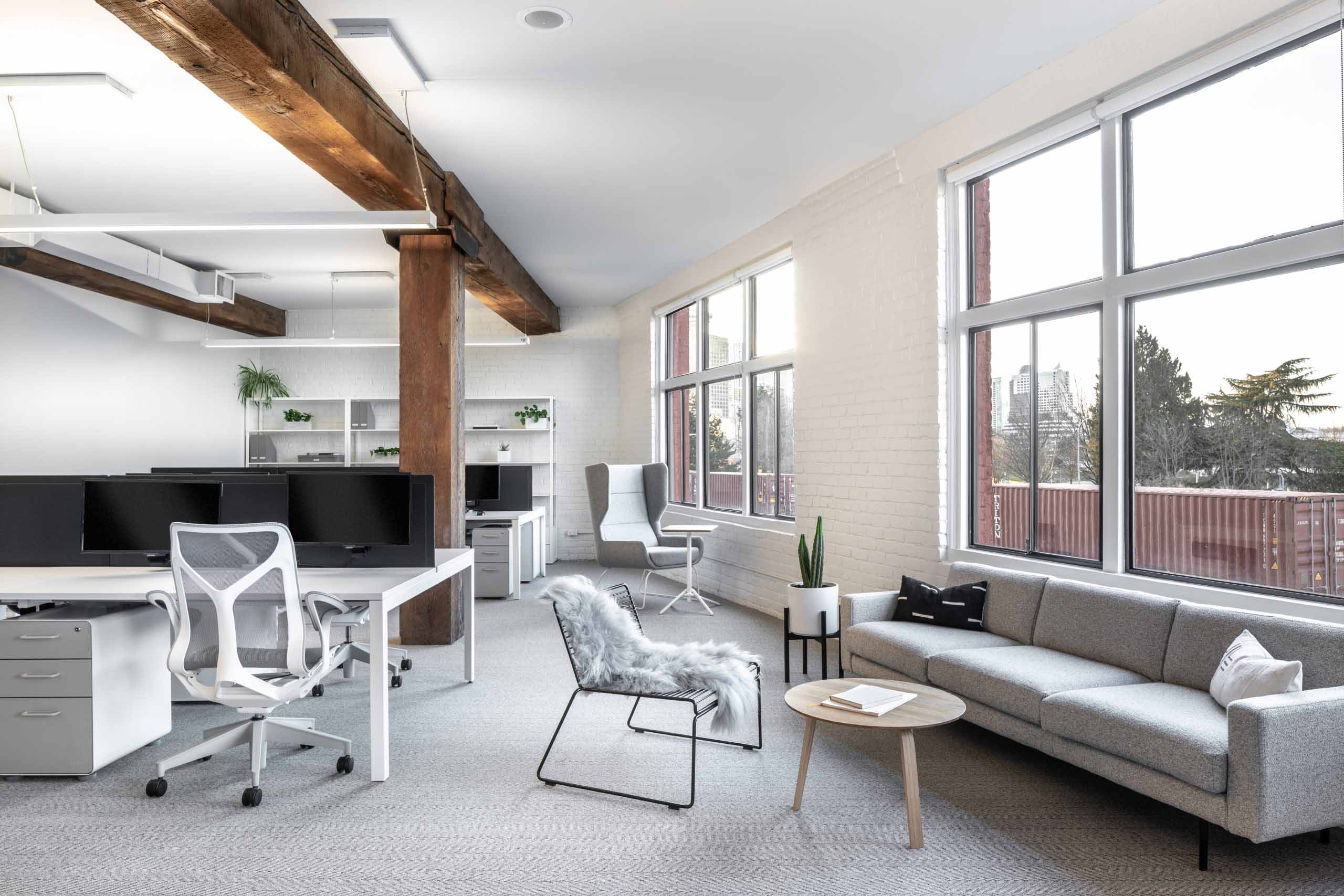
Quick answer: Biophilic office design is an approach to workplace design that connects people to nature through natural light, plants, organic materials, water, views, and natural shapes. The goal is not decoration. It is a measurable improvement in employee wellbeing, focus, and productivity, with research linking nature-rich offices to roughly 6 percent higher productivity and 15 percent higher reported wellbeing.
We spend about 90 percent of our lives indoors, and for most office workers, the bulk of that time is under artificial light, surrounded by drywall and laminate. Our biology never adapted to that. Biophilic office design is the response: a way of building workspaces that reconnects people with the natural world they are wired to respond to.
This is not a trend that will fade with the next furniture catalogue. The evidence behind it is strong, the business case is clear, and in a Canadian climate with long, grey winters, the case is even stronger. This guide explains what biophilic office design is, what the research actually shows, how to bring it into a commercial office, and what it looks like in real Canadian workplaces.
At Cutler, we have designed commercial spaces across Metro Vancouver for over 14 years, completing more than 1,200 projects totaling over 5 million square feet. Nature-inspired design has moved from a nice-to-have to one of the most common requests we hear from clients planning a new office.
What is biophilic office design?
Biophilic office design is the practice of designing workplaces that satisfy our innate need to connect with nature. The word “biophilia” means love of life or living things, a term popularized by biologist E.O. Wilson to describe the instinctive bond humans feel toward the natural world.
So what is biophilic office design in practical terms? It is more than putting a few potted plants in the corner. A genuine biophilic office space works on several layers at once: direct contact with nature like daylight, plants, and water; natural analogues like wood grain, stone, and organic patterns; and the spatial qualities of nature like open sightlines, varied ceiling heights, and a sense of refuge. The most widely used framework, Terrapin Bright Green’s “14 Patterns of Biophilic Design,” breaks these into specific, repeatable design moves.
That distinction matters. A single ficus by the elevator is window dressing. A biophilic design office space is one where the layout, light, materials, and finishes all work together so that people feel calmer and think more clearly without quite knowing why.
Why nature-inspired workspaces are the future of work
The way we work changed permanently over the past few years, and the office has had to justify its existence in a way it never did before. When people can work from home, the workplace has to offer something better than a kitchen table. A healthy, light-filled, nature-rich environment is one of the few things a home office usually cannot match.
There is a talent dimension too. Employees increasingly judge an employer by the environment they are asked to spend their days in. A dim, sealed box full of grey cubicles sends a message, and it is not a good one. A workplace that feels alive signals that the company values the people inside it.
Then there is the wellbeing economy. Burnout, absenteeism, and turnover are expensive, and organizations are finally treating the physical environment as a lever they can pull. Biophilic office design sits at the intersection of all three forces, which is why we think nature-inspired workspaces are not a passing style but the baseline for good workplace design going forward.

How biophilic design improves productivity and wellbeing
This is where biophilic design separates itself from ordinary office aesthetics. The benefits are documented, not assumed. In offices with natural elements, the research points to real, measurable gains:
- +6% productivity for people working in offices with natural elements.
- +15% wellbeing reported by employees in nature-rich workplaces.
- +15% creativity reported compared with offices with no connection to nature.
The most cited study is the 2015 Human Spaces report, “The Global Impact of Biophilic Design in the Workplace,” led by Professor Sir Cary Cooper and based on a survey of 7,600 office workers across 16 countries. It found that people working in environments with natural elements reported 15 percent higher wellbeing, were 6 percent more productive, and reported 15 percent higher creativity than those in offices with no connection to nature. Those numbers are hard to ignore when you map them onto a payroll.
Plants alone carry weight. A 2014 study from the University of Exeter, published in the Journal of Experimental Psychology: Applied, found that adding greenery to previously bare offices lifted productivity by 15 percent. The researchers attributed it to greater engagement and a stronger sense of comfort and control over the space.
Daylight and views matter just as much. A landmark study by the Heschong Mahone Group found that office workers with the best access to views performed 10 to 25 percent better on tests of mental function and memory recall. The connection between nature and recovery goes back even further. In a 1984 study published in the journal Science, Roger Ulrich found that hospital patients with a window view of trees recovered faster and needed less pain medication than those facing a brick wall.
Why these small percentages are a big deal
A 6 percent productivity gain might sound modest until you do the math. The World Green Building Council points out that staff salaries and benefits typically account for around 90 percent of a business’s operating costs. Rent and energy are a rounding error by comparison. That means even a small improvement in how well people work returns far more than the cost of the design that produced it.
Put plainly, you are not spending money on plants. You are investing in the most expensive asset on your books, which is your people. Does that change how you weigh the cost of a green wall? It should.
Why biophilic office design matters in Canadian workplaces
The benefits of biophilic design are universal, but a few of them land harder in Canada. Our winters are long, our daylight hours are short, and a large share of the working year happens in the dark. Anyone who has driven to work and home again without seeing the sun knows the feeling.
That has real health consequences. The Canadian Mental Health Association notes that roughly 15 percent of Canadians report the milder “winter blues,” with a smaller group experiencing full seasonal affective disorder. Designing an office that pulls in as much natural light as possible, and that uses warm materials and greenery to soften the grey months, is not a luxury in this climate. It is a practical mental-health measure.
There is a regional materials story too. British Columbia is a North American leader in mass timber, and the provincial building code now allows taller wood buildings than almost anywhere else. That makes exposed wood structure, timber feature walls, and natural finishes both available and locally meaningful for offices here. Biophilic design also feeds directly into the WELL Building Standard and LEED certifications that many Canadian commercial tenants now pursue, since daylight, air quality, and connection to nature all earn credits.
How to bring biophilic design into your office
You do not need a rainforest atrium to design a biophilic office. The most effective interventions are often the most practical. Here is how we approach it on commercial fit-outs.
Start with natural light
Light is the single highest-impact biophilic element, and it is usually the cheapest to plan for. Position workstations and collaboration zones along the windows rather than handing the best light to private offices and meeting rooms. Use glass partitions instead of solid walls so daylight can travel deep into the floor plate. Where windows are limited, tunable LED lighting that shifts colour temperature through the day can mimic the natural rhythm of sunlight and support healthier sleep and alertness.
The mistake we see most often is treating window space as a perk for the corner office. Spread it around. Daylight is one of the few benefits that costs almost nothing to share more fairly.

Add plants and living walls
Greenery is the most recognizable feature of any biophilic office, and it scales to any budget. At the simplest level, clusters of potted plants and planters used as soft dividers bring life to a space immediately. At the higher end, a living green wall becomes a focal point that purifies air, dampens noise, and gives an office its signature image.
Choose species that suit the light you actually have, not the light you wish you had. Low-light performers like pothos, ZZ plants, and snake plants survive in real office conditions. For anything substantial, plan for irrigation and maintenance up front, because a neglected living wall does more harm to your brand than no wall at all.
Use natural materials and textures
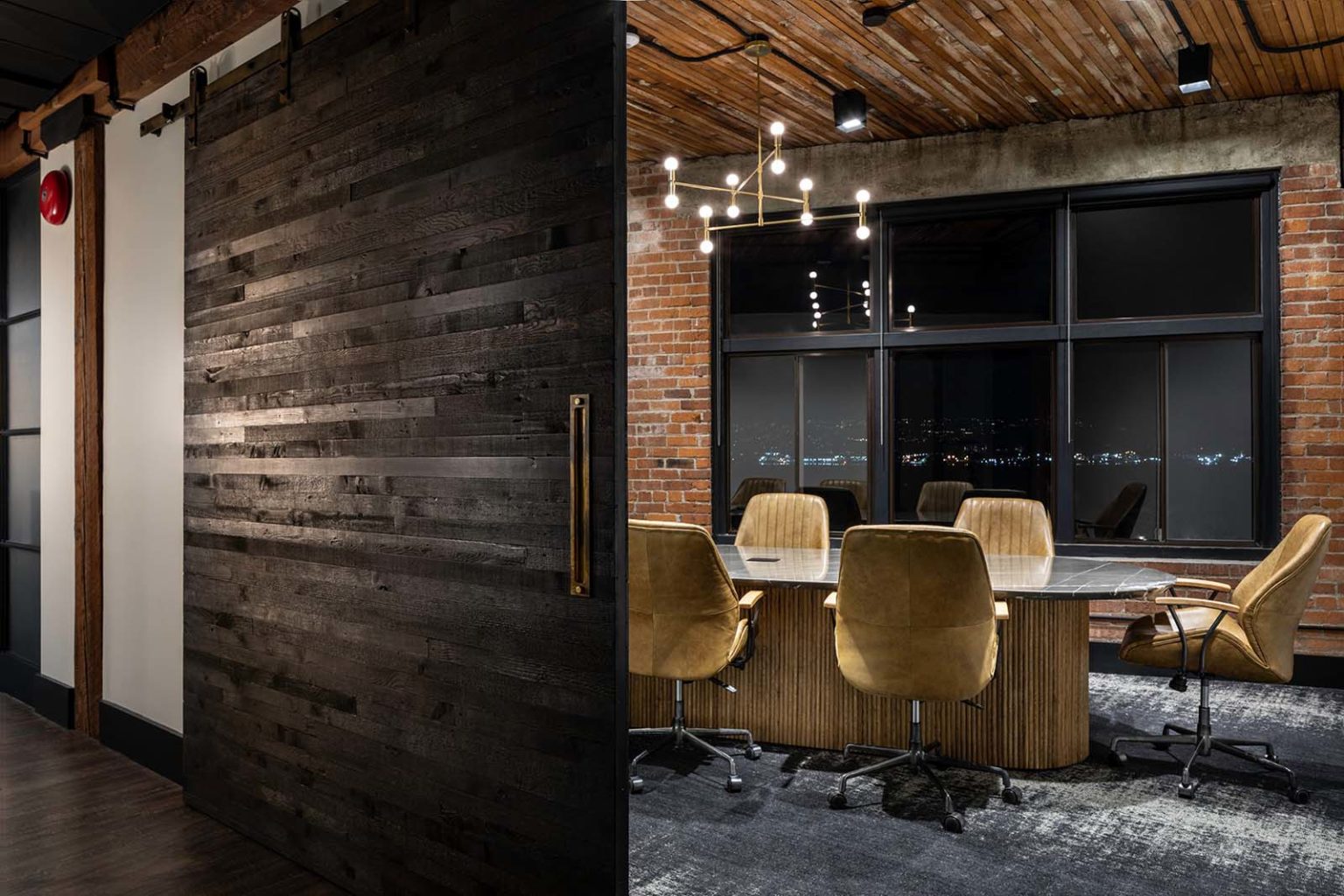
Materials carry the biophilic effect even where live plants cannot go. Wood is the workhorse here. Timber feature walls, exposed structure, butcher-block surfaces, and wood-look flooring all introduce warmth and the organic patterns our brains read as natural. Stone, clay, wool, cork, and leather add tactile variety that flat laminates never will.
This is where British Columbia offices have a genuine advantage. With BC’s mass timber sector, sourcing real wood and locally relevant natural finishes is easier and more credible here than in many other markets. A reclaimed-wood reception wall tells a regional story while doing biophilic work at the same time.
Bring in water and natural sound
Water features are the most dramatic biophilic element and, predictably, the most demanding. A small recirculating water wall or tabletop feature introduces gentle movement and sound that masks office noise and lowers stress. The trade-off is maintenance, humidity, and cost, so water tends to suit lobbies, reception areas, and wellness rooms more than open work floors. If a built water feature is out of scope, recorded natural soundscapes piped softly into break areas deliver a surprising share of the same calming effect.
Design with natural shapes, views, and refuge
The last layer is spatial. Curved walls, organic furniture forms, and patterns drawn from nature feel less rigid than a grid of right angles. Equally important is giving people a mix of prospect and refuge: open areas with long sightlines to a window, balanced by smaller, sheltered nooks where someone can focus or decompress. That variety mirrors how we feel safest in natural settings, and it is one of the most overlooked parts of a biophilic office space.
What does biophilic office design cost?
The honest answer is that it depends on how far you take it. Biophilic design is a spectrum, not a single line item, and that is good news for budgets.
At the affordable end, sit daylight planning, glass partitions, plants, and natural-look finishes. These often cost little or nothing extra because you are simply making better choices about materials and layout you were already paying for. Reorienting a floor plan to share daylight is a design decision, not a premium upgrade.
The cost climbs with the marquee features. A professionally installed living green wall generally runs in the range of $150 to $250 or more per square foot, plus ongoing maintenance. Custom water features and specialty natural materials push higher still. As a rough planning figure, building meaningful biophilic elements into a commercial fit-out tends to add somewhere in the range of 5 to 15 percent to the interiors budget, depending on ambition. Given the productivity research above, that is one of the easier numbers to justify to a finance team.
The smartest approach is to stage the investment. Capture the high-impact, low-cost wins first, like daylight planning and greenery, then build toward a feature wall or water element as budget allows.
Real-world biophilic design in Canadian offices
You do not have to look abroad for inspiration. Some of the strongest examples of nature-led design sit right here in BC.
The Vancouver Convention Centre West is topped by a six-acre living roof planted with hundreds of thousands of indigenous plants, one of the largest living roofs in Canada and a landmark example of architecture treating nature as infrastructure rather than ornament. Telus Garden in downtown Vancouver wove greenery, daylight, and sustainability into a working office tower. Across the province, a growing number of headquarters use exposed mass timber and daylight-first floor plates as their defining feature rather than an afterthought.

We see the same instinct in the office projects we design across Metro Vancouver. On recent fit-outs, that has meant pulling daylight deep into the floor with glass-walled meeting rooms, anchoring reception areas with reclaimed-wood feature walls, and using planted dividers to break up open-plan floors into calmer zones. None of it required a dramatic budget. It required treating nature as a design priority from the first sketch rather than a finishing touch. If you want to see the kind of office and workspace projects we take on, our sector work shows how these ideas play out at full scale.
Frequently Asked Questions
What is biophilic office design?
Biophilic office design is an approach to workplace design that connects employees to nature through natural light, plants, organic materials like wood and stone, water features, natural views, and nature-inspired shapes and patterns. The term comes from “biophilia,” meaning our innate human attraction to living things, and the goal is to create offices that support how people are biologically wired to feel and perform. In practice, it goes well beyond adding a few plants. A true biophilic office considers daylight access, materials, layout, and sensory variety together, drawing on frameworks like Terrapin Bright Green’s 14 Patterns of Biophilic Design. The result is a workspace that lowers stress and improves focus, often without occupants being able to point to exactly why the room feels better.
How does biophilic design improve employee productivity and wellbeing?
The research is consistent. The 2015 Human Spaces study of 7,600 workers across 16 countries found that people in offices with natural elements were 6 percent more productive and reported 15 percent higher wellbeing and 15 percent higher creativity. A separate University of Exeter study found that simply adding plants to bare offices raised productivity by 15 percent. The mechanism is partly about stress and attention. Contact with nature, even indirect contact through materials, views, and daylight, lowers physiological stress and helps the brain recover its capacity to concentrate. Because staff salaries make up roughly 90 percent of a typical business’s operating costs, even a small lift in productivity or a small drop in absenteeism usually outweighs the cost of the design that produced it.
What are practical examples of biophilic design in a Canadian office?
Practical examples range from simple to ambitious. At the accessible end are daylight-first floor plans, glass partitions that let light travel across the floor, clusters of low-maintenance plants used as dividers, and timber or stone finishes. At the higher end are living green walls, indoor water features, and exposed mass timber structure, which BC offices are especially well positioned to use given the province’s leadership in wood construction. For larger landmarks, the Vancouver Convention Centre West’s six-acre living roof and Telus Garden in downtown Vancouver show how nature can shape a building rather than decorate it. Most commercial offices land somewhere in between, combining generous daylight, a feature green wall or planted zones, and natural materials to create a calmer, healthier workplace.
How much does biophilic design add to a commercial fit-out cost?
It varies widely with ambition. Many biophilic moves cost little or nothing extra, because daylight planning, glass partitions, plant selection, and natural-look finishes are choices within a budget you are already spending. The premium features are where costs rise: a professionally installed living wall typically runs $150 to $250 or more per square foot plus maintenance, and custom water features add more again. As a planning rule of thumb, building meaningful biophilic elements into a fit-out often adds somewhere in the range of 5 to 15 percent to the interiors budget, depending on how far you push the marquee features. Weighed against the documented gains in productivity and retention, most organizations find the return justifies the spend. A good designer can help you stage the investment so you capture the high-impact, low-cost wins first.
Is biophilic design suitable for small office spaces in BC?
Yes, and small offices often benefit the most because every square foot is working harder. The fundamentals scale down cleanly: prioritize natural light, choose a few healthy plants suited to your actual light levels, use warm natural materials, and keep sightlines open so the space feels larger and calmer. You do not need a green wall or an atrium to feel the effect. In a BC context, where winters are dark and many small offices occupy tenant-improvement spaces with limited glazing, the highest-value moves are usually maximizing the daylight you have, supplementing with tunable lighting, and adding greenery and wood tones. These deliver most of the wellbeing benefit at a fraction of the cost of the headline features, which makes biophilic design a realistic option for almost any small office space.
Bringing nature into your workplace
Biophilic office design is not a styling exercise. It is a practical response to how human beings actually function, backed by research that links nature-rich offices to better focus, lower stress, higher creativity, and fewer sick days. In a Canadian climate, where so much of the working year happens in the dark, designing for daylight and natural connection is one of the smartest investments a company can make in its people.
You can start anywhere on the spectrum. A small office can win most of the benefit through daylight, plants, and natural materials, while a larger headquarters can build toward living walls and water features over time. What matters is treating nature as a design priority from the first sketch rather than a decoration added at the end. So here is the real question: what is the grey box your team works in every day costing you, and what could a greener one give back? Talk to Cutler about your office and we will help you plan it.