

What Is Tenant Improvement? A Complete Guide for BC Business Owners
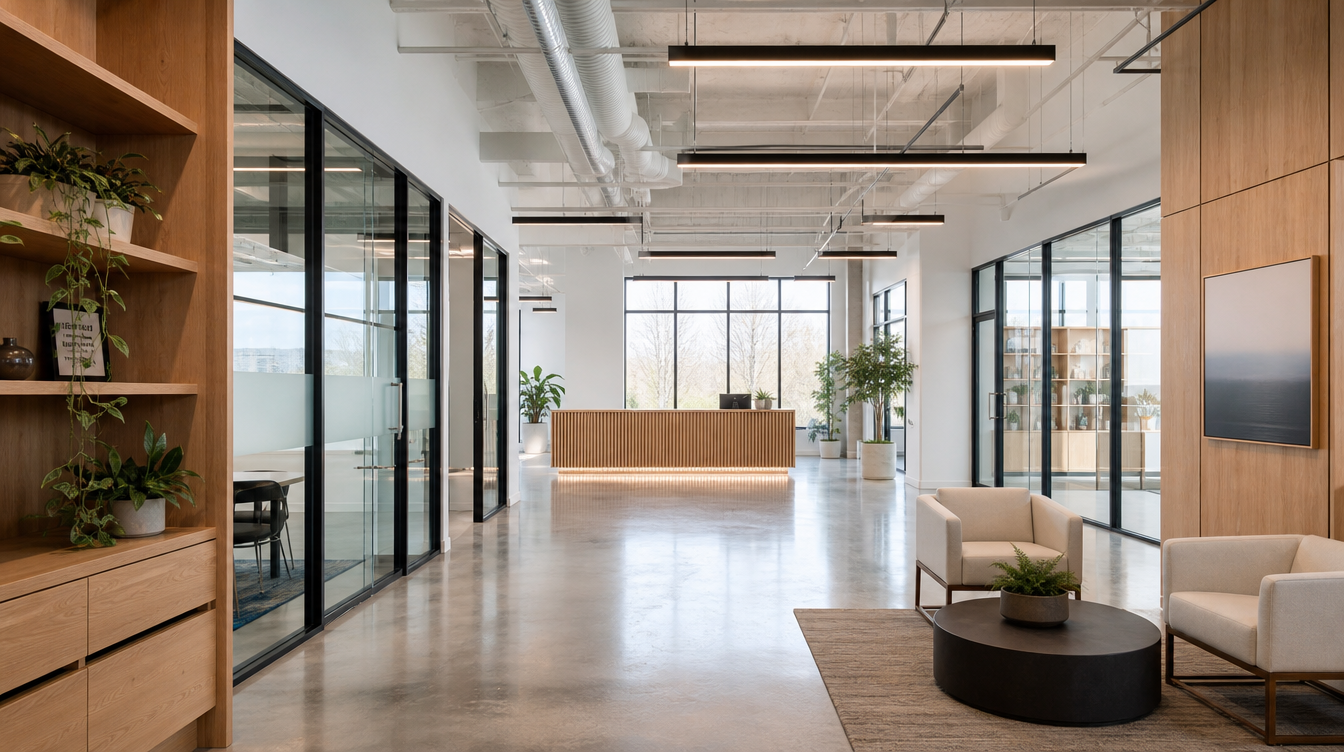
If you are a business owner, you can treat the two terms as functional synonyms when discussing scope and design. When discussing financing, depreciation, or end-of-lease responsibilities, the distinction becomes meaningful. Your lawyer and accountant will care about the leasehold improvement framing because it affects how the work is recorded, amortized, and treated when the lease ends.
How the Tenant Improvement Process Works in BC
The TI process in British Columbia generally moves through five phases, each with its own decisions, costs, and risks. The order matters. Skipping or rushing a phase is the most common reason projects go over budget or miss their opening date.
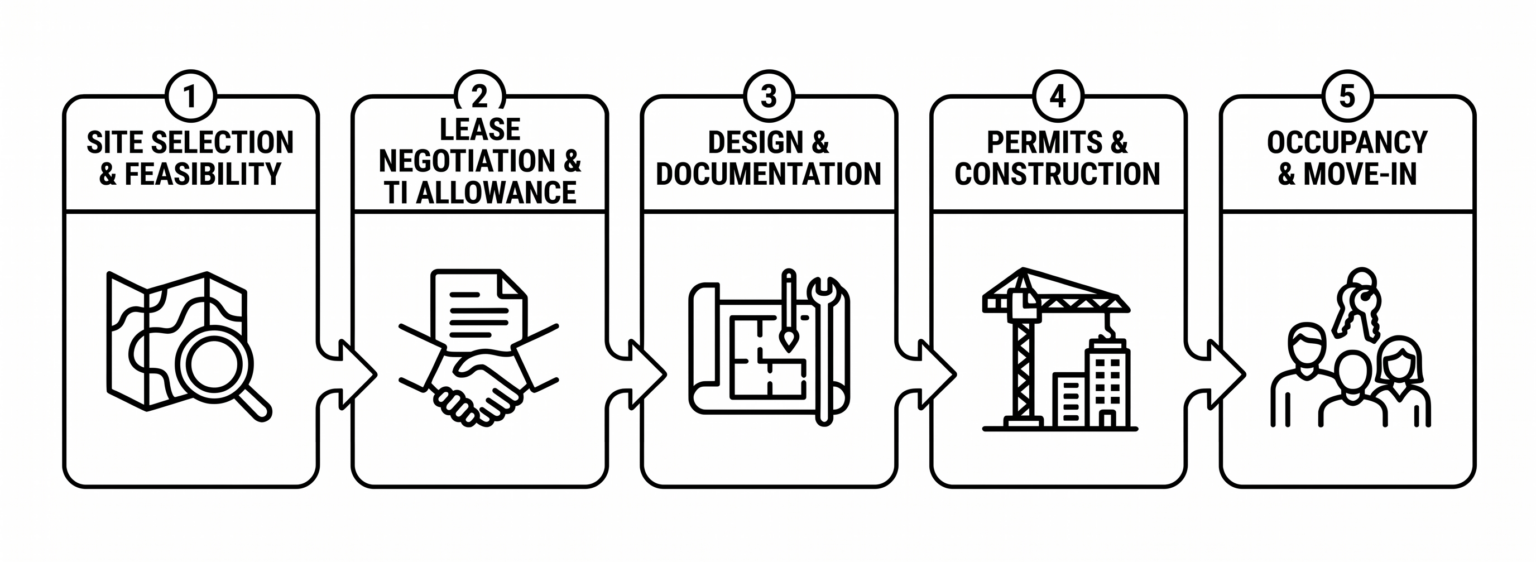
1. Site Selection and Feasibility
Before a lease is signed, the tenant should evaluate whether a candidate space can actually support the intended use. A feasibility study reviews zoning, building systems, base building condition, accessibility, parking, ventilation, and structural capacity. We recommend that BC business owners commission a feasibility review before committing to any lease over five years or any space requiring significant modifications. Spending two to four weeks on feasibility upfront often saves months of construction delays and tens of thousands of dollars in unexpected upgrades later.
2. Lease Negotiation and TI Allowance
The lease is where the financial framework for your TI gets locked in. Landlords often offer a tenant improvement allowance, sometimes called “TI money,” which is a per-square-foot contribution toward fit-out costs. In BC, allowances vary widely based on lease length, market conditions, and tenant covenant strength. Strong tenants on long leases in soft markets can negotiate higher allowances. Weak tenants on short leases in tight markets may receive little or none.
The lease should also clarify who handles permitting, who owns the improvements at lease end, what the base building condition is, and what restoration obligations apply when the lease terminates. These clauses matter as much as the allowance itself.
3. Design and Documentation
Once the lease is signed, the design phase begins. This typically includes test fits and schematic layouts, design development, and full construction documentation. For a typical retail or office space in BC, design and documentation take six to twelve weeks, depending on complexity, the number of stakeholders, and how quickly decisions are made. Spaces with regulated programs, such as healthcare, food service, or cannabis retail, take longer because they require additional health authority and regulatory review.
A well-prepared set of construction documents protects you during bidding and construction. It reduces change orders, keeps contractors honest, and gives your project manager a clear yardstick for quality and progress.
4. Permits and Construction
Permits in BC are issued at the municipal level, with most commercial TIs requiring a building permit and trade permits for electrical, plumbing, mechanical, and gas work. Permit timelines vary by city. Vancouver and Burnaby tend to be slower than smaller municipalities, with building permit reviews often taking eight to sixteen weeks for a moderately complex commercial fit-out. Construction itself usually runs eight to twenty weeks for a typical TI between 2,000 and 10,000 square feet.
During construction, contract administration becomes the most active phase of the project. Site visits, RFIs, change order reviews, and progress payment certifications keep the work on track and aligned with the design intent.
5. Occupancy and Move-In
Before you can occupy the space, the municipality issues an occupancy permit confirming that the work meets code. Final inspections cover life safety systems, accessibility, electrical, mechanical, and plumbing. After occupancy, deficiencies are tracked and corrected during a defined warranty period, typically twelve months from substantial completion.
How Much Does a Commercial Tenant Improvement Cost in BC?
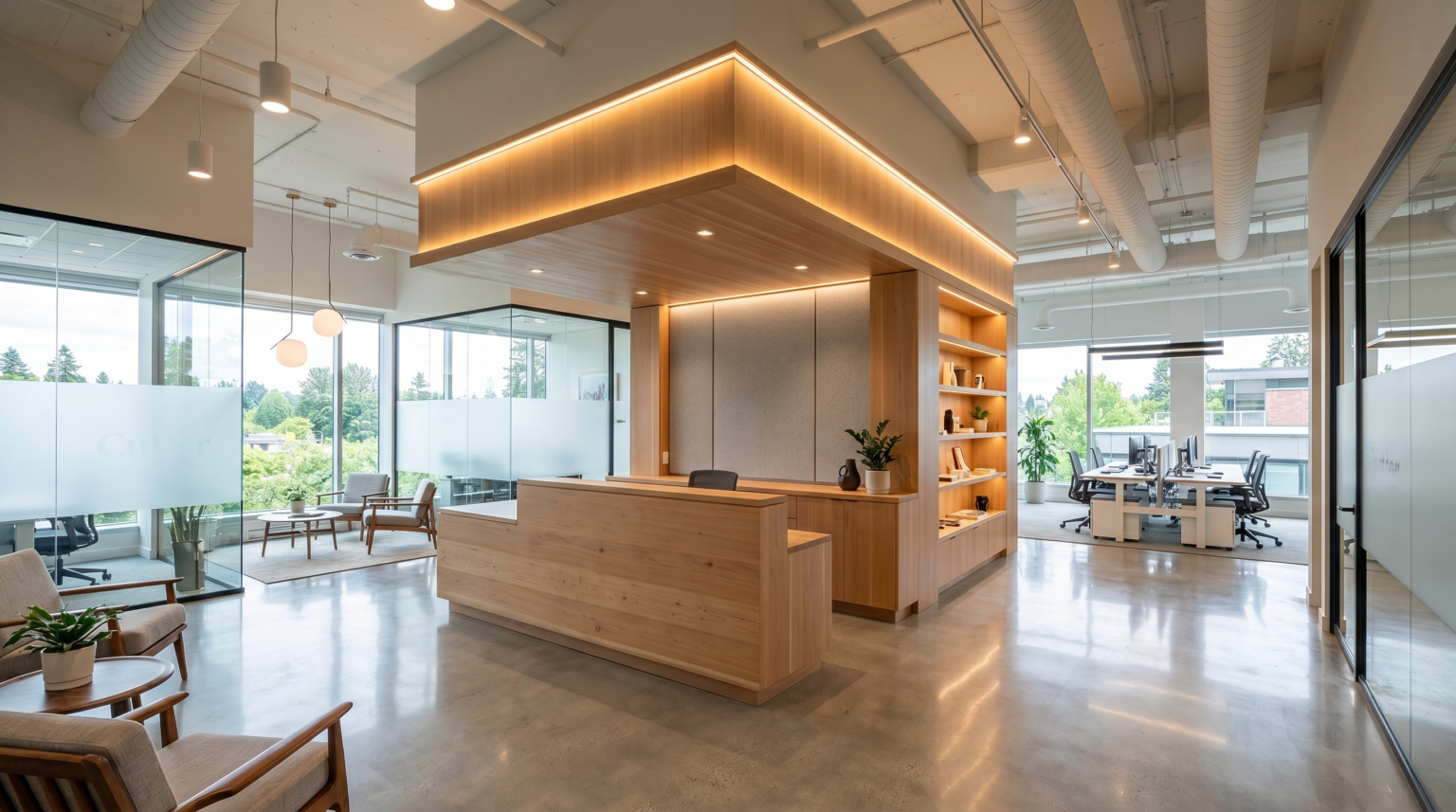
Tenant improvement costs in British Columbia vary based on space type, finish level, and the existing condition of the base building. As of 2025, our team typically sees the following ranges in the Lower Mainland and on Vancouver Island:
– Base-level office TI: $80 to $130 per square foot
– Mid-level office or retail TI: $130 to $200 per square foot
– High-end retail, healthcare, or hospitality TI: $200 to $400 per square foot
– Specialized programs (dental, medical, cannabis, food service): $250 to $500+ per square foot
These figures are all-in estimates that include design fees, permits, construction, and FFE in many cases. Spaces requiring extensive mechanical or electrical upgrades, structural work, or specialized infrastructure such as medical gas, commercial kitchens, or extraction systems sit at the upper end of each range. Cosmetic refreshes of an already-functional space can come in lower.
Two cost drivers catch BC tenants off guard most often. The first is mechanical and electrical capacity. If the base building service does not support your equipment load, upgrading it can add tens of thousands of dollars and weeks to the schedule. The second is accessibility. Older buildings often need washroom, entry, or circulation upgrades to meet current BC Building Code accessibility requirements, even when the rest of the work is cosmetic.

Who Pays for Tenants Improvements: Landlord or Tenant?
The answer depends entirely on the lease. In most BC commercial leases, the cost of tenant improvements is shared, with the landlord contributing a fixed TI allowance and the tenant paying the balance. The split depends on market dynamics, lease term, the tenant’s financial strength, and how much value the improvements add to the building.
A few common arrangements:
- Landlord-funded fit-out. The landlord delivers a finished or near-finished space, and the rent reflects this investment. Common in build-to-suit arrangements and some retail centres.
- TI allowance with tenant overage. The landlord provides a per-square-foot allowance, and the tenant funds anything above that amount. This is the most common structure in BC office and retail leases.
- Tenant-funded with rent abatement. The tenant pays for all improvements, and the landlord offsets the cost through free rent for a period, often three to six months.
- Turnkey delivery. The landlord builds the space to the tenant’s specification at the landlord’s cost, and the rent rate is adjusted upward to reflect the investment.
Each structure has tax, cash flow, and end-of-lease implications. Before signing, our team always recommends modelling the total occupancy cost over the full lease term, not just comparing base rents and headline TI allowances.
What BC Business Owners Should Know Before Fitting Out a Commercial Space
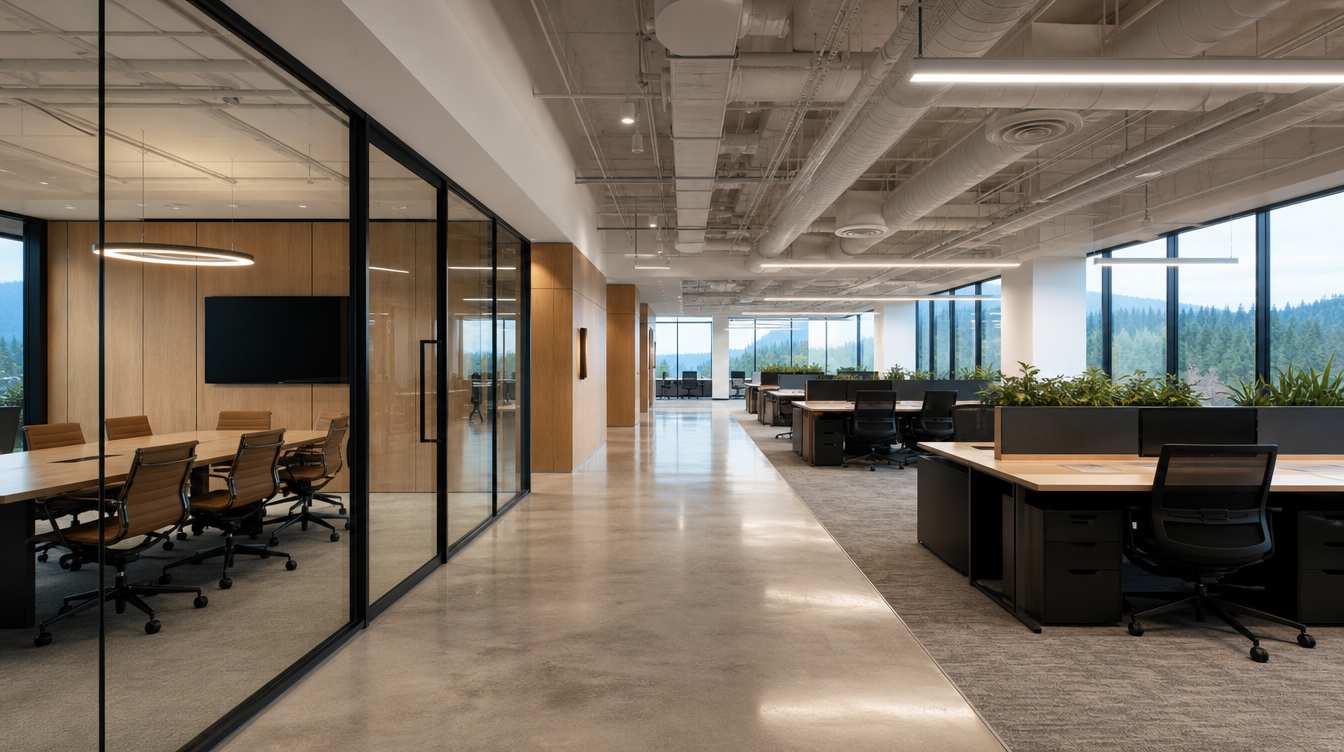
A few practical lessons stand out from working with hundreds of tenants across the province. They are simple to state and easy to overlook in the rush to sign a lease.
Engage your design team before you sign the lease, not after. A short feasibility review will tell you whether the space can support your operations and what the realistic fit-out cost will be. Negotiating from this position is far stronger than discovering the truth after the lease is binding.
Build a contingency into your TI budget of at least ten to fifteen percent. Older buildings reveal surprises during demolition. Permit conditions change. Material lead times slip. The tenants who finish on budget are the ones who planned for the unexpected.
Confirm the base building condition in writing. The lease should describe what the landlord is delivering: HVAC capacity, electrical service, demising walls, flooring condition, washroom availability, and accessibility status. Ambiguity here is where most disputes start.
Plan for restoration costs at lease end. Many BC leases require the tenant to remove improvements and return the space to its original condition. This obligation can cost as much as the original fit-out if it is not negotiated carefully upfront.
Frequently Asked Questions
How do tenant improvement allowances work in Canada?
A tenant improvement allowance is a per-square-foot contribution from the landlord toward the cost of customizing a leased space. In Canada, the allowance is typically negotiated as part of the lease and disbursed either as a lump sum on completion, in progress draws during construction, or as a rent credit. The allowance is taxable income to the tenant in some structures and a capital contribution in others, so we recommend confirming the tax treatment with your accountant before signing.
What is the difference between tenant improvement and leasehold improvement?
Tenant improvement and leasehold improvement describe the same construction work from different perspectives. Tenant improvement is the operational and design term used by landlords, brokers, and designers. Leasehold improvement is the accounting term used to describe the capitalized value of those same modifications, which is depreciated over the life of the lease for tax purposes in Canada.
How much does a tenant improvement cost per square foot in BC?
In British Columbia, tenant improvement costs typically range from $80 to $500 or more per square foot, depending on the type of space, finish level, and base building condition. Standard office fit-outs in Vancouver and the Lower Mainland tend to fall between $130 and $200 per square foot, while specialized programs like healthcare, dental, and cannabis retail often exceed $250 per square foot once mechanical, electrical, and regulatory requirements are factored in.
Who pays for tenant improvements, the landlord or the tenant?
Both parties usually contribute, with the split set by the lease. The landlord typically provides a tenant improvement allowance based on a per-square-foot rate, and the tenant pays for anything above that amount. In some leases, the landlord delivers a turnkey space at no direct cost to the tenant, with the investment recovered through a higher base rent.
What is “TI money” in a Canadian commercial real estate lease?
“TI money” is industry shorthand for the tenant improvement allowance written into a commercial lease. It refers to the dollar amount the landlord agrees to contribute toward customizing the space for the tenant’s use. The amount, the conditions for release, and the documentation required to access the funds are all set out in the lease and should be reviewed carefully before signing.
Planning a Tenant Improvement in BC?
Tenant improvement is one of the largest capital decisions a growing business will make, and the lease is where most of the financial risk gets locked in. With more than 1,200 completed commercial projects and 14 years of experience across British Columbia, our team helps tenants make informed decisions before signing, design spaces that support their operations, and deliver projects on time and within budget.
If you are evaluating a space, negotiating a lease, or planning a fit-out, please reach out to discuss whether Cutler is the right fit for your project.