

Dental Office Design: A Guide to Planning Functional, Patient-Friendly Spaces
Dental Office Design: A Guide to Planning Functional, Patient-Friendly Spaces
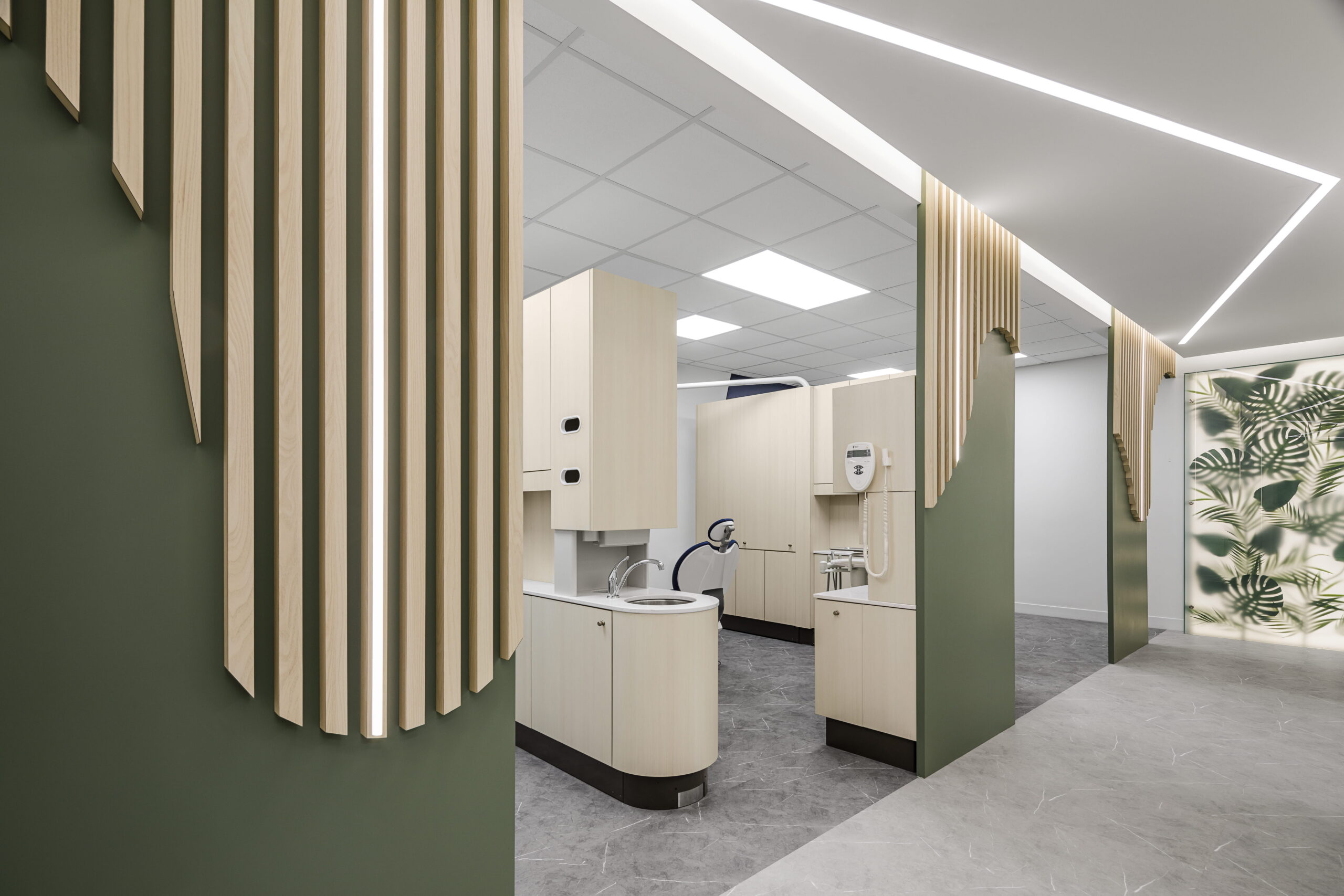
Dental office design requires balancing clinical efficiency, patient comfort, and regulatory compliance across three distinct functional zones. Treatment rooms should measure 110 to 120 square feet each, and the total space should be planned around patient flow, infection control, and accessibility before any walls go up.
About 36 percent of people experience some form of dental anxiety, according to research published in the British Dental Journal. That statistic matters because much of that anxiety begins before a patient ever sits in the chair. It starts in the parking lot, builds in the waiting room, and peaks when the operatory feels cold and clinical.
Good dental office design addresses each of those moments. The layout, materials, lighting, and spatial flow shape how patients feel, how efficiently staff work, and how clearly the practice communicates its brand.
At Cutler, we have designed healthcare and wellness spaces across Metro Vancouver for over 14 years, completing more than 1,200 projects totaling over 5 million square feet. This guide draws on that experience to walk you through the key decisions behind a successful dental office design. If you are still evaluating your space, we have also written a detailed guide on what to evaluate before committing to a commercial space.
WHERE TO START
Start with a Feasibility Study
Before selecting finishes or sketching floor plans, evaluate whether your space can actually support a dental practice. Zoning restrictions, building codes, and infrastructure limitations can derail a project months in. A feasibility study catches those problems early.
Start by confirming the site is zoned for healthcare or medical use. Some municipalities treat dental offices differently from general commercial tenants, and a zoning variance can add weeks or months to your timeline. The building’s mechanical and electrical capacity matters too. Dental practices require more power per square foot than a typical office, and older buildings may lack the amperage for digital imaging equipment, compressors, and vacuum systems.
Square footage is another critical factor. A solo practitioner with two operatories may need 1,200 to 1,500 square feet. A multi-doctor group practice with six or more treatment rooms typically requires 3,000 to 4,000 square feet, depending on whether you plan to include a lab, panoramic X-ray room, or consultation space.
We recommend completing a feasibility study before signing any lease. Our team has written a detailed guide on what to evaluate before committing to a commercial space, which covers the structural and financial questions that apply to dental buildouts.
SPACE PLANNING
Understanding the Three Functional Zones
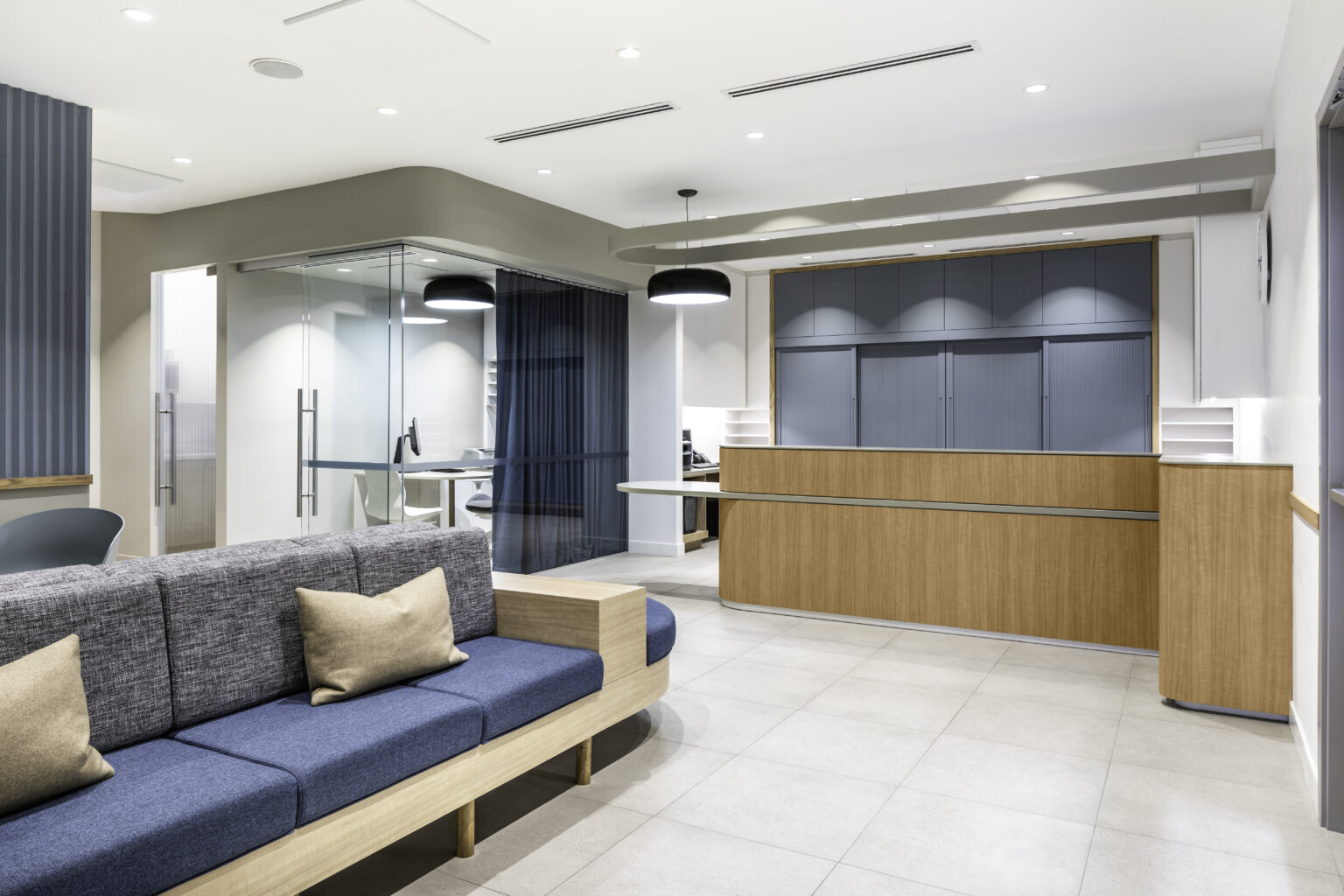
Every dental office design layout breaks down into three functional zones. How these zones connect determines the efficiency of the entire practice.
Clinical Zone
Includes operatories, sterilization, a lab (if applicable), and equipment storage. Sterilization should sit centrally, with short, direct paths to every treatment room. Staff should never have to pass through patient-facing areas to move instruments or supplies.
Administrative Zone
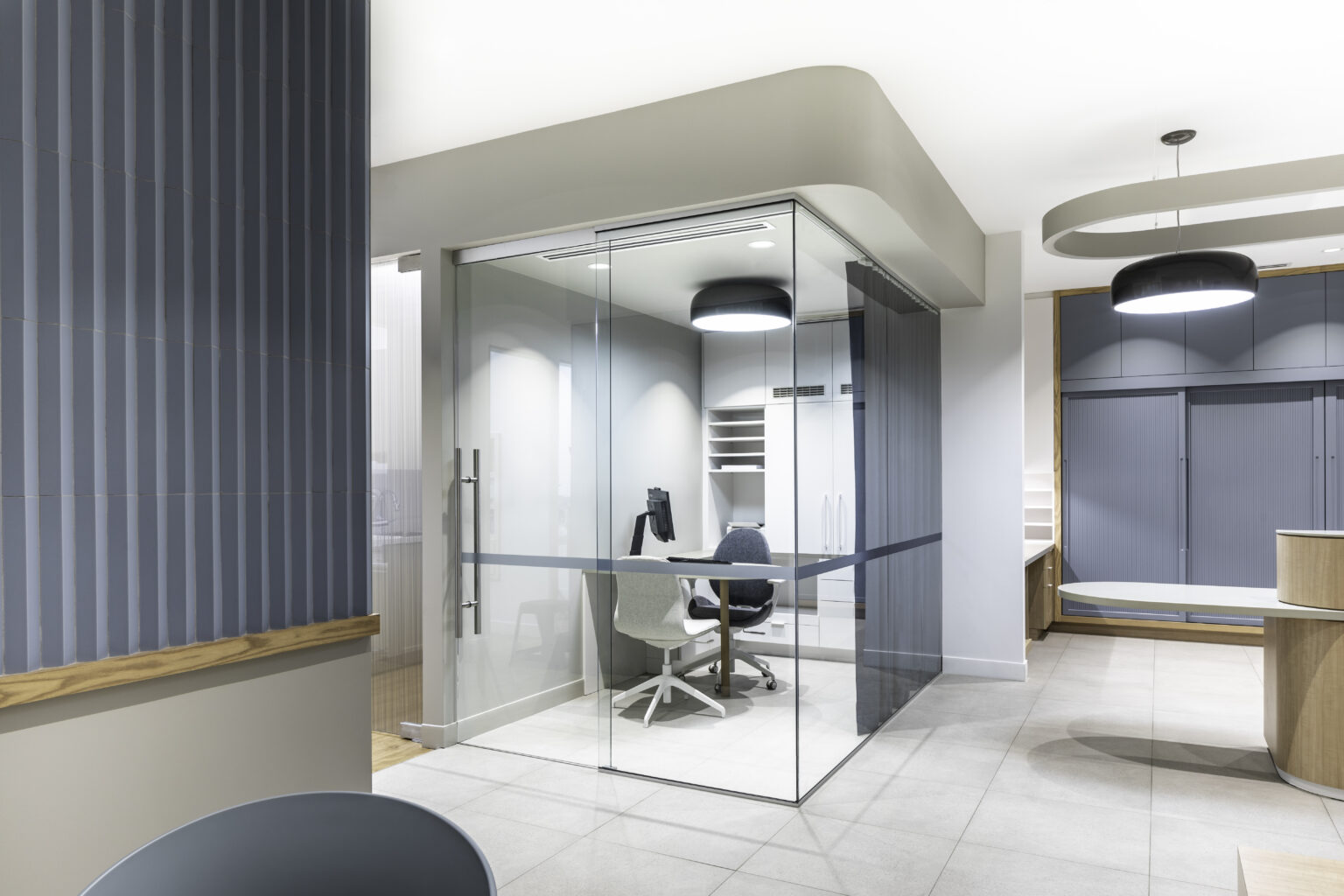
Covers the front desk, private offices, staff break areas, and supply storage. It should connect to both the clinical and patient-facing zones without creating bottlenecks.
Patient-Facing Zone
Everything the patient sees: the entry, waiting area, consultation rooms, and corridors leading to treatment. This zone sets the emotional tone of the practice.
Flow between these zones is the real design challenge. Patients should move in a clear, one-directional path from entry to checkout. Staff need a separate circulation route that lets them move between operatories and sterilization without crossing patient traffic. When these paths overlap, the result is congestion and wasted time.
A practice seeing 20 to 30 patients per day cannot afford a layout that adds unnecessary steps. Even small inefficiencies, like a sterilization room positioned 40 feet from the farthest operatory, compound over hundreds of visits each month.
THE OPERATORY
Treatment Room Layout and Sizing
The treatment room is where clinical outcomes and patient experience intersect. Dental office design ideas often focus on aesthetics, but operatory sizing and layout have a much larger effect on daily operations.
Recommended Size
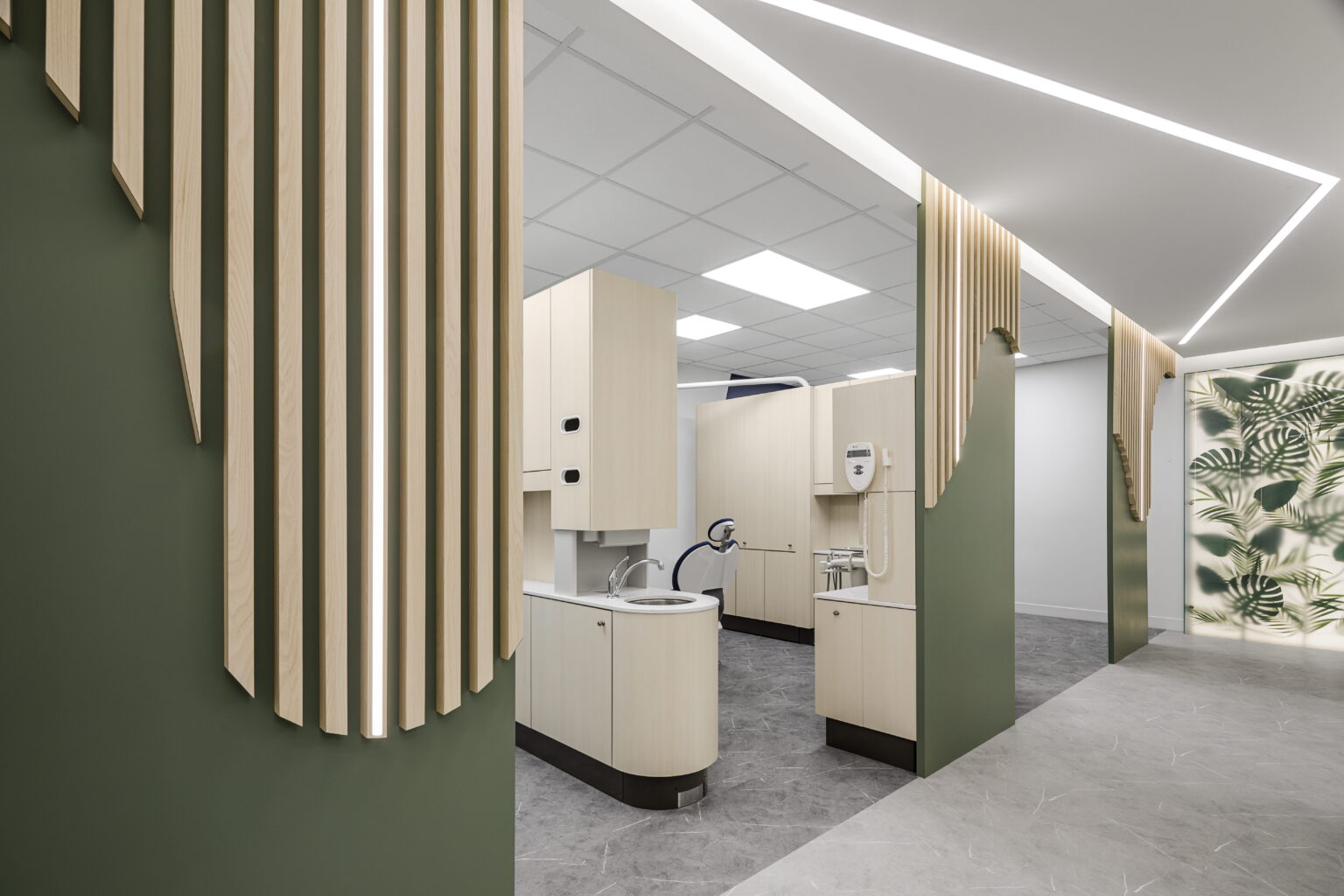
The minimum functional size for a general dentistry operatory is about 96 to 100 square feet. Our recommendation is 110 to 120 square feet per treatment room. The extra space accommodates a wider range of equipment configurations and gives both the practitioner and dental assistant room to work without colliding. Specialty practices need more: an oral surgery operatory may require 130 to 150 square feet. Pediatric offices sometimes go slightly smaller per room but add more rooms to handle shorter appointments and higher patient volume.
Single-Entry vs. Dual-Entry
Single-entry and dual-entry layouts represent two different approaches. In a single-entry layout, the patient enters and exits through the same door. This keeps the clinical corridor private but can create bottlenecks during back-to-back appointments. Dual-entry layouts use separate doors for the patient side and the clinical side, which improves turnover time and keeps flow moving forward. Equipment positioning should follow the practitioner’s dominant hand and preferred working style. Right-handed dentists typically prefer rear delivery systems with the cart behind the patient’s head and to the right. Cabinetry, monitor arms, and the dental light should all be placed to minimize reaching and twisting.
How Many Operatories?
Plan for 2.5 to 3 treatment rooms per full-time dentist, plus one room per hygienist. A solo practitioner usually starts with three to four rooms. A two-doctor practice should plan for six to eight. Building one or two shell rooms (framed but not equipped) during initial construction gives you expansion capacity without a second project.
FIRST IMPRESSIONS
Reception and Waiting Area Design
Patients form their first impression within seconds of walking through the door. If you are exploring how to design a dental office that puts patients at ease, the reception area is the space to prioritize.
Seating & Layout
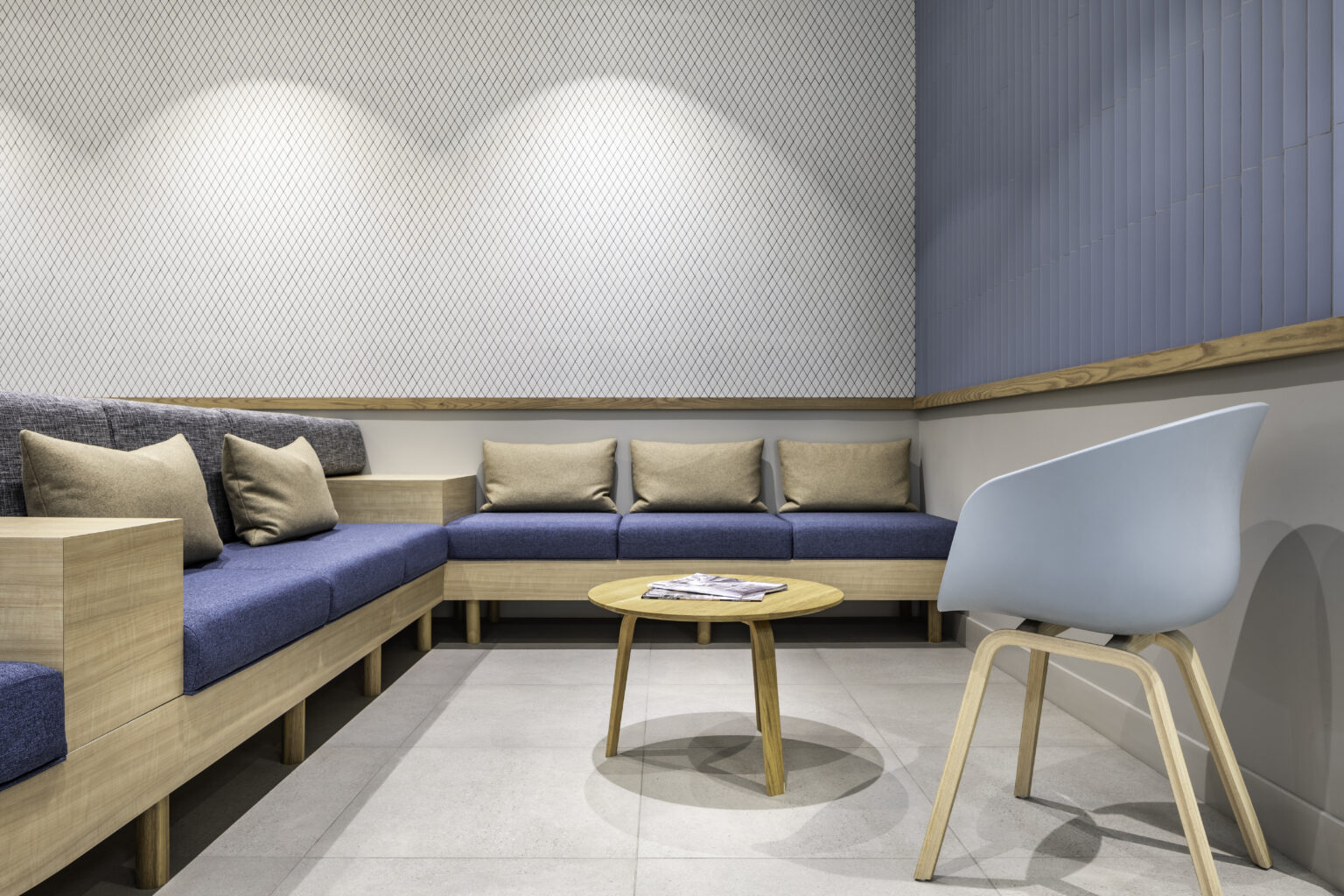
Seating should feel residential, not institutional. Use a mix of individual chairs, small benches, and semi-private nooks rather than rows of identical seats. Spacing at least 30 inches apart gives patients personal space, which is especially important for those already anxious. Wood tones, soft textiles, and matte finishes read as warm and approachable. High-gloss surfaces and stainless steel tend to feel clinical. The goal is a space that feels more like a well-designed lounge than a medical facility.
Natural Light
Natural light is one of the most effective tools for reducing perceived wait times. Position the waiting area near windows when possible. If the space lacks exterior exposure, use warm-toned LED lighting with a color temperature between 2,700K and 3,000K to simulate a more natural atmosphere.
Check-In & Privacy
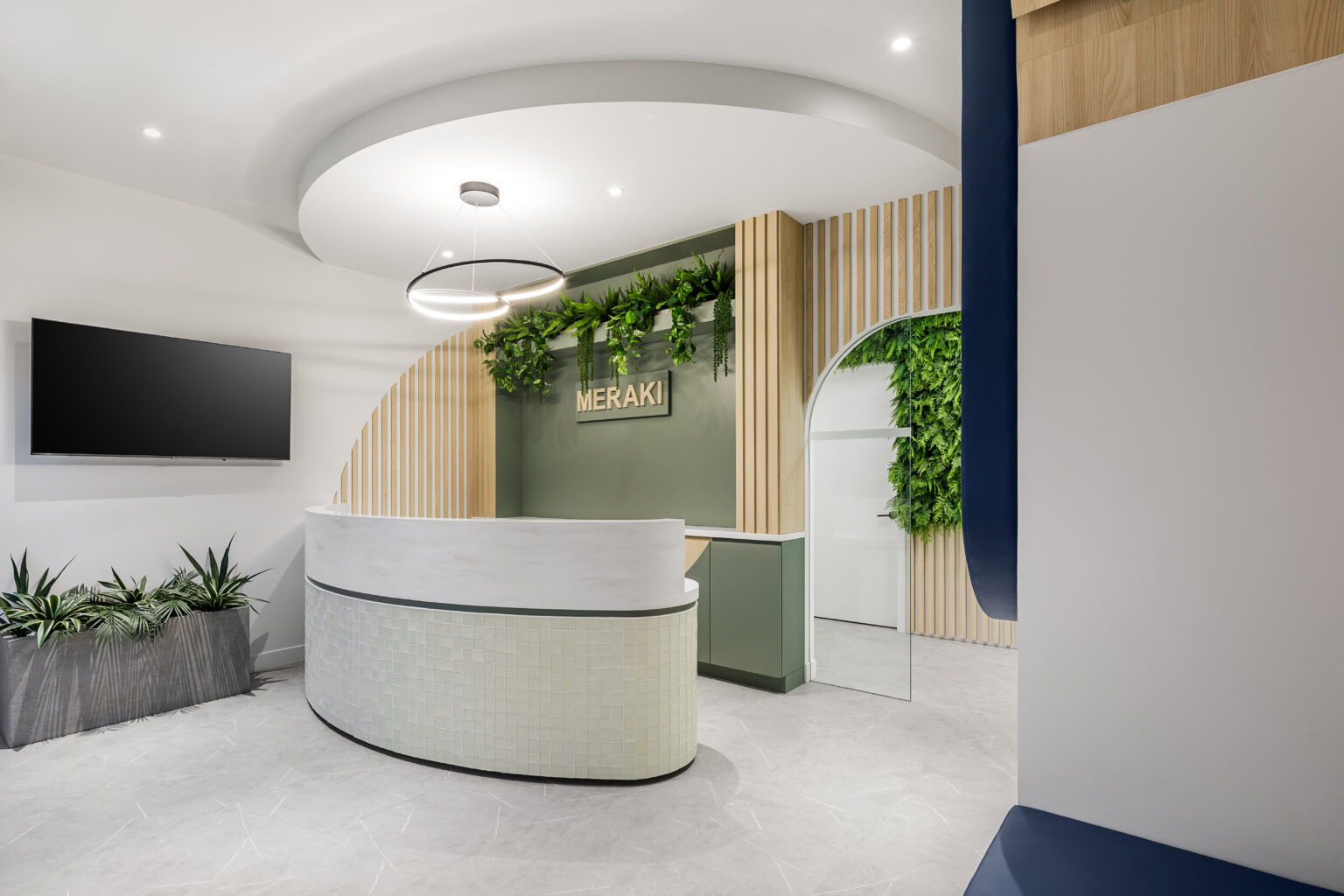
Check-in flow deserves careful planning. The front desk should be visible immediately upon entry so patients know where to go. A standing-height counter with a lowered section for seated visitors meets both functional and accessibility needs. Consider whether your practice uses a tablet-based check-in or a fully digital system, because each option changes the counter design and electrical requirements. Privacy at the front desk is a frequent oversight. Patients discussing insurance, payment, or medical history should not be overheard by everyone in the waiting room. A short partition, white noise system, or recessed check-in alcove can address this without major architectural changes.
DESIGN PALETTE
Choosing Materials, Colors, and Lighting
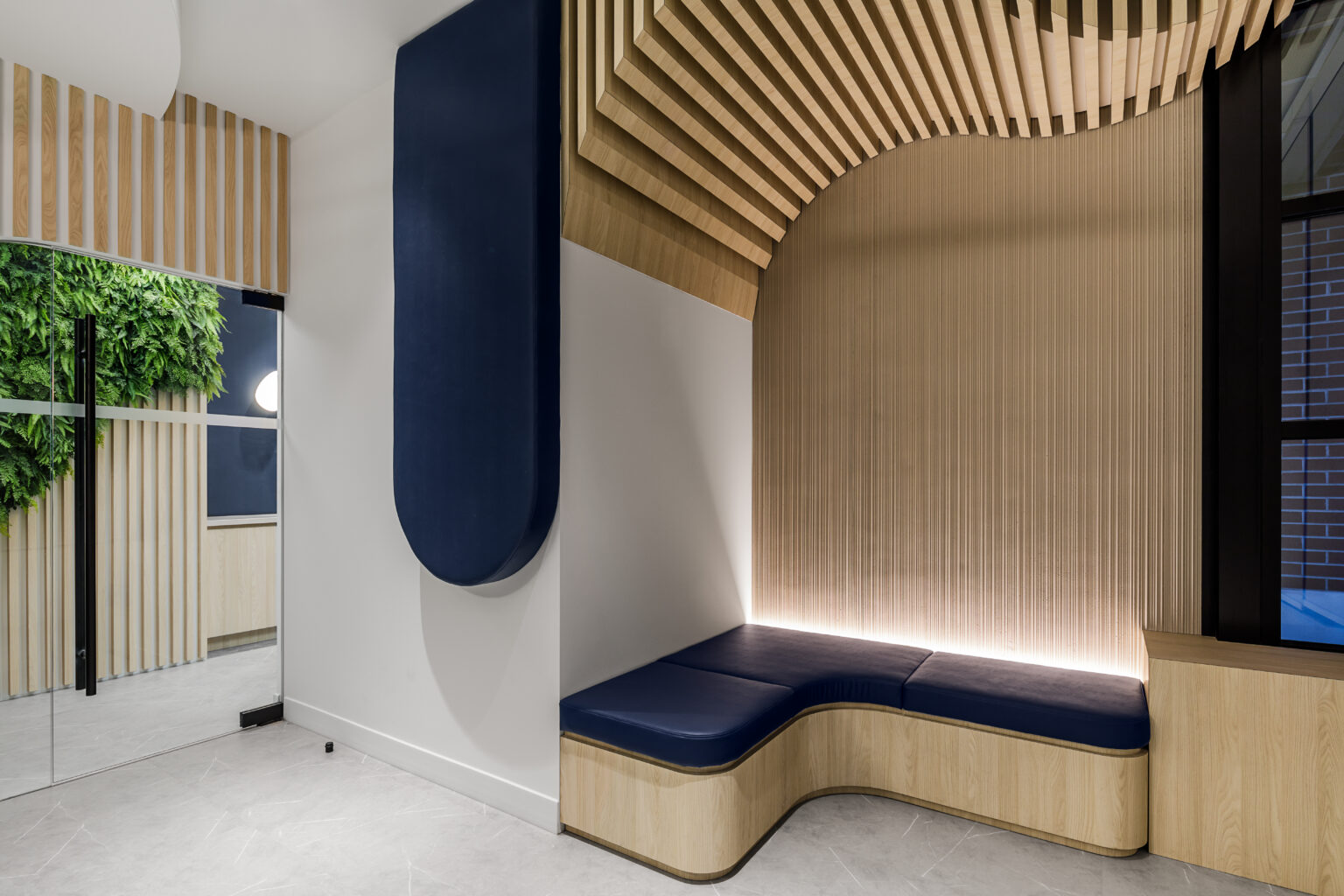
The material palette in a dental clinic interior design project must satisfy two competing demands: it needs to feel warm and welcoming to patients, and it needs to meet strict infection control standards.
Color Psychology
Color psychology offers practical guidance. Blues and greens are associated with calm and trust. Soft sage, muted teal, and dusty blue work well as accent colors. Warm neutrals (cream, taupe, warm gray) serve as base tones throughout the practice. Avoid stark white in patient-facing areas, as it reads as sterile and can heighten anxiety.
Infection Control Surfaces
Infection control surfaces are non-negotiable in clinical zones. Countertops and flooring must be non-porous, seamless where possible, and resistant to disinfection chemicals. Corian or quartz work well for counters. Luxury vinyl tile (LVT) or sheet vinyl with welded seams is the standard for clinical flooring because it eliminates grout lines where bacteria collect. In patient-facing areas, porcelain tile, engineered hardwood, and higher-end LVT can all create a polished look while remaining durable under heavy foot traffic.
Lighting by Zone
Lighting serves different purposes in different zones. Operatories need high-intensity, color-accurate task lighting at the chair, typically 5,000K or higher. Ambient lighting in the same room should be softer and adjustable so patients are not staring into harsh fixtures while reclined. Waiting areas benefit from layered lighting: recessed downlights, indirect cove lighting, and accent fixtures that create depth without glare.
Biophilic Design
Biophilic design elements are gaining traction in dental office design for good reason. Preserved moss walls, living plant installations, natural wood accents, and stone textures all trigger a measurable relaxation response. Research suggests patients in healthcare environments with biophilic elements report up to 15 percent lower stress levels. Even a wood-grain feature wall behind the reception desk contributes to this effect.
INFRASTRUCTURE
Technology and Infrastructure Planning
Technology decisions should happen early in the dental office design process, ideally during schematic design, not after framing is complete. Retrofitting infrastructure is expensive and disruptive.
Digital Imaging
Panoramic X-ray units require a dedicated room or alcove with specific shielding (typically lead-lined drywall). Intraoral sensors and CBCT scanners need high-speed data connections back to a central server or cloud system. Plan the network architecture before the electrician pulls wire.
Practice Management Software
Practice management software drives the data infrastructure. Every operatory needs at least two network drops and adequate power outlets for monitors, computers, and peripherals. A ceiling-mounted monitor arm with an integrated cable channel keeps the treatment room organized.
HVAC & Air Quality
Dental procedures generate aerosols, which makes ventilation both a patient safety concern and a regulatory consideration. Treatment rooms should have a minimum of six air changes per hour, with 12 or more preferred. HEPA filtration or UV-C air purification systems are increasingly common. Plan ductwork sizing and air handler capacity before walls go up.
Electrical Load
Electrical load planning cannot be an afterthought. Between compressors, vacuum pumps, autoclaves, imaging equipment, and HVAC, a four-operatory practice may require 200-amp service or more. The mechanical room must be sized to accommodate this equipment along with future expansion.
Data Cabling
Data cabling should be Category 6A or better throughout the practice. Clinical systems perform better on hardwired connections with consistent bandwidth and lower latency than wireless alternatives.
COMPLIANCE
Accessibility and Code Compliance
Accessibility is one of the most overlooked areas in dental office design, and one of the most consequential. The Americans with Disabilities Act (ADA) sets baseline requirements, but provincial and local building codes may impose additional standards.
Barrier-free design starts at the building entrance. The path from parking to the front door must be accessible, with appropriate ramp grades, door widths (minimum 36 inches clear), and threshold heights. Corridors should be at least 44 inches wide to allow wheelchair passage. At least one operatory must be fully accessible, which means a larger footprint (typically 120 to 130 square feet minimum) and a clear floor area beside the dental chair for wheelchair transfer.
Restrooms must meet accessibility standards: grab bars, turning radius clearance (60-inch diameter), accessible sink height, and lever-style hardware. If the plan includes only one restroom, it must be fully accessible.
Signage and wayfinding also fall under accessibility requirements. Room signs should include raised characters and Braille. These details are easy to overlook during construction but costly to correct after occupancy.
Building codes vary by municipality but generally cover fire separations, occupancy loads, egress routes, plumbing fixture counts, and ventilation rates. A dental office is typically classified as a Business (Group B) occupancy, though some jurisdictions apply Healthcare classifications depending on the scope of services. Confirm the occupancy classification early because it affects everything from sprinkler requirements to exit distances.
Working with a design firm experienced in healthcare projects helps you avoid code compliance surprises during permitting. Our architecture and interior design services include code analysis as a standard part of the design process.
COMMON QUESTIONS
Frequently Asked Questions
How much does dental office design cost?
Dental office construction typically ranges from $150 to $350 per square foot, depending on finish level, equipment complexity, and local labor costs. A 2,000-square-foot general practice might cost $300,000 to $700,000 for a full buildout. Design fees run 8 to 12 percent of construction cost. Specialty practices with advanced imaging or surgical suites fall at the higher end.
What is the ideal size of a dental operatory?
The ideal general dentistry operatory measures 110 to 120 square feet, with a minimum of 96 to 100 square feet. Specialty operatories for oral surgery or endodontics may require 130 to 150 square feet. The room should accommodate the dental chair, delivery system, cabinetry, and adequate clearance for the practitioner and assistant to move freely.
What colors are best for a dental office?
Soft blues, muted greens, and warm neutrals perform well in dental environments. Avoid stark white in patient-facing areas, as it can feel sterile and increase anxiety. Accent colors drawn from nature (sage, teal, warm wood tones) add visual interest while maintaining a relaxed atmosphere.
Should I hire a dental architect or designer?
Yes. A design firm with healthcare experience understands code requirements, infection control standards, and workflow patterns that general commercial designers may not. The investment typically pays for itself through fewer change orders, faster permitting, and a more efficient layout. Our team at Cutler has completed over 1,200 commercial and healthcare projects with 40-plus combined years of leadership experience.
How many treatment rooms do I need?
Plan for 2.5 to 3 operatories per full-time dentist, plus one room per hygienist. A solo practitioner should start with three to four rooms. A two-dentist practice with two hygienists would ideally have eight to ten. Building shell rooms during initial construction gives you expansion capacity without a second buildout.
How do I make patients feel comfortable through design?
Patient comfort comes from multiple design layers. Warm, natural materials reduce the clinical feel. Natural light and soft ambient lighting lower stress. Comfortable, well-spaced seating gives patients personal space. Acoustic privacy at the front desk and between operatories prevents conversations from carrying. Small details, such as artwork or a beverage station, signal that the practice values the patient experience beyond clinical care.
Bringing It All Together
Dental office design is an investment that pays returns every day the practice operates. A well-planned layout reduces wasted steps, shortens turnaround, and creates an environment where anxious patients begin to relax before treatment starts. The decisions you make about zone flow, operatory sizing, materials, and infrastructure all compound into either a space that works or one that fights against you.
Planning these details early avoids the costly change orders that come from designing on the fly during construction.
If you are planning a new dental office or renovating an existing one, our team would welcome the conversation. Reach out to Cutler to discuss your project scope, timeline, and goals. We have spent over 14 years refining our approach to healthcare and commercial spaces, and we would be glad to bring that experience to your practice.